Share what is getting in the way
Tell the clinic about your symptoms, routines, concerns and the activities you want to return to.
Find care by symptom or goal
Start with what you notice. We will help you identify the most relevant rehabilitation service.
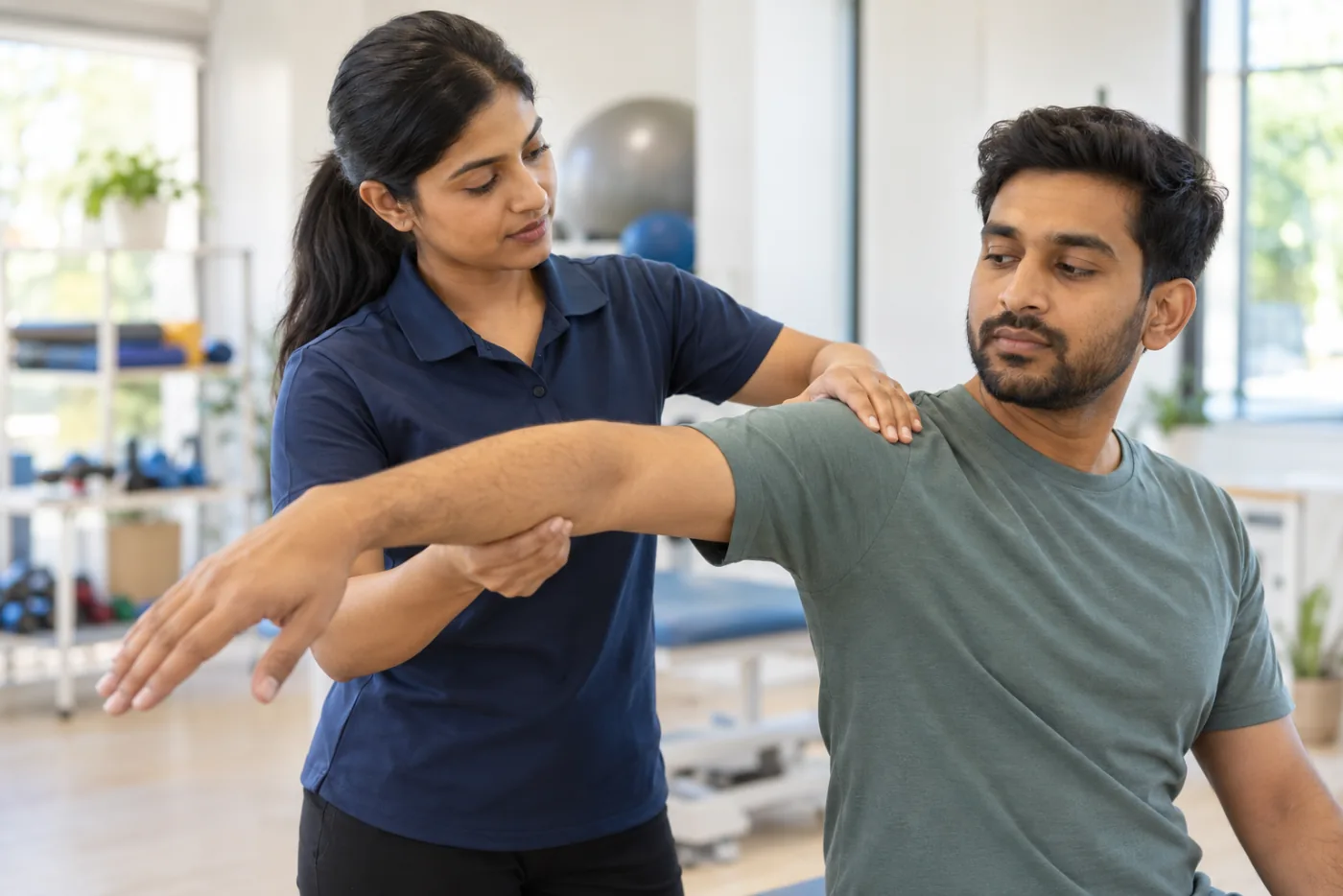
Start with what you notice
Choose the concern that feels closest. You can still select “I am not sure” in the appointment form.
Open any service for who it may help, common concerns and what an individual treatment plan may involve.
Service availability, practitioner credentials, referral requirements and exact treatment scope must be confirmed by Spot Rehab before launch.
Care for everyday pain, recovery after surgery, sports demands and selected spine or joint concerns.
Assessment and rehabilitation for pain, stiffness, injury and recovery after orthopedic procedures.
Adults and young people whose pain, injury or surgery is affecting everyday movement, work, sleep or activity.
Back or neck pain, joint stiffness, sprains, strains, overuse concerns and post-surgery rehabilitation.
A movement assessment, guided exercise, strength and mobility work, education, and hands-on techniques when clinically suitable.
Sport-specific support from early injury management through a graded return to training and competition.
Recreational and competitive athletes managing a new injury, a recurring concern or a return after time away.
Muscle strains, ligament sprains, tendon concerns, overload, reduced confidence and repeat injuries.
Load and movement assessment, progressive strength work, sport-specific drills, education and return-to-activity planning.
Assessment-led manual care for selected muscle, spine and joint concerns, supported by movement advice.
People seeking a hands-on option for certain musculoskeletal concerns after an appropriate clinical assessment.
Spine or joint discomfort, stiffness and movement restrictions that may be suitable for conservative care.
Joint or soft-tissue techniques, movement guidance and exercise when suitable. Provider credentials and service scope require client confirmation.
Rehabilitation shaped around neurological change, childhood development, women’s health and older-adult mobility.

Goal-led rehabilitation for changes in movement, balance, coordination and independence.
People living with the effects of stroke or another neurological condition that changes how they move.
Weakness, stiffness, walking difficulty, reduced balance, altered coordination and challenges with everyday tasks.
Task practice, movement retraining, strength and balance work, mobility practice, education and caregiver guidance where appropriate.
Child-friendly support for movement, strength, balance and participation at home, school and play.
Babies, children and young people with movement, coordination, strength or physical development concerns.
Delayed movement milestones, gait differences, balance difficulty, reduced strength and physical challenges linked to a diagnosed condition.
Play-based movement practice, strength and balance activities, positioning advice and practical home guidance for families.
Respectful, individual care for pelvic health, pregnancy-related movement and postnatal recovery concerns.
Women seeking physiotherapy support during pregnancy, after birth or for pelvic health concerns at other life stages.
Pelvic or lower-back discomfort, pelvic floor concerns, bladder or bowel symptoms and returning to activity after birth.
A private assessment, education, pelvic floor and movement exercises, activity guidance and a plan suited to individual goals.
Practical rehabilitation for balance, strength, walking and confidence in daily movement.
Older adults noticing changes in mobility, balance, strength or confidence at home and in the community.
Falls or near-falls, slower walking, reduced endurance, difficulty with stairs and recovery after illness or inactivity.
Balance and strength practice, walking and transfer training, mobility advice, home exercise and family or caregiver guidance.
Focused support for heart, lung and vascular rehabilitation, persistent swelling, and nerve or muscle assessment.

Clinically appropriate rehabilitation for people whose heart, lungs or circulation affect activity and endurance.
People referred for rehabilitation after a heart, lung or vascular condition, treatment or period of reduced activity.
Breathlessness, low exercise tolerance, fatigue, difficulty pacing activity and reduced confidence with movement.
Appropriately monitored exercise, breathing practice, pacing, education and gradual activity progression. Referral requirements need client confirmation.
Specialist support for ongoing swelling that can affect comfort, movement and day-to-day activity.
People with diagnosed or suspected lymphedema, including swelling after surgery or medical treatment.
Limb swelling, heaviness, tightness, skin changes and difficulty moving or fitting clothing comfortably.
Education, skin care, exercise, compression guidance and selected manual techniques. Exact treatment availability requires client confirmation.
A specialist service related to assessing nerve and muscle function or using selected electrical modalities.
People referred for further investigation or selected treatment when nerve or muscle function needs closer assessment.
Symptoms such as altered sensation, weakness or nerve-related changes that need an appropriate clinical pathway.
The exact assessment, equipment, practitioner qualification and referral pathway must be confirmed by the client before launch.
A simple path from first conversation to a plan that can change with you.
Tell the clinic about your symptoms, routines, concerns and the activities you want to return to.
The relevant clinician reviews movement and other appropriate factors, then explains the findings in clear language.
Your care plan may combine in-clinic treatment, guided exercise, education and steps to continue at home.
Progress and goals can be revisited so the plan stays relevant as your movement and confidence change.
Typical journey shown for planning. Confirm Spot Rehab’s intake, assessment and follow-up process before launch.
Start with the activity, comfort or independence you want to work toward, even if you do not know the service name.
The page and appointment request use everyday language so it is easier to describe what you need.
A broad service list gives the clinic a useful starting point for directing your enquiry.
Request an appointment online, call the clinic or start a WhatsApp conversation.
You do not have to choose perfectly. Share what you are experiencing and the clinic can guide the next step.
The final form can connect to WhatsApp, email or the client’s booking system.